Heat pumps work brilliantly in the UK climate, but getting the settings right can make a real difference to both your comfort and your energy bills. With electricity prices still elevated in 2025 and winter bringing its usual challenges, optimising your heat pump isn’t just about staying warm — it’s about doing so efficiently and affordably. This guide gives you simple, homeowner-friendly settings that work for real-world UK homes, helping you get the most from your system throughout the colder months.
What Are the Ideal Heat Pump Settings for UK Winter? (Quick Answer)
Let’s start with the essentials. Here are the recommended settings that work well for most UK homes during winter:
| Setting | Value | Why It Matters |
|---|---|---|
| Indoor Thermostat Temperature | 19-21°C | Good balance between comfort and efficiency |
| Flow Temperature (Underfloor Heating) | 35-45°C | Optimal for UFH systems; maximises COP |
| Flow Temperature (Radiators) | 45-50°C | Works well with modern, properly sized radiators |
| Operating Mode | Auto/Heating mode (Not Boost) | Maintains steady, efficient operation |
| Fan/ Compressor Speed | Auto | Allows system to self-optimise |
| Hot Water Cylinder Temperature | 45-50°C (with weekly 60°C legionella cycle) | Safe for daily use; efficient heating | Operating Schedule | Continuous low operation preferred | More efficient than on/off cycles |
| Weather Compensation | Enable if available | Auto-adjusts flow temp based on outdoor conditions |
These settings provide an excellent starting point for winter comfort whilst keeping your running costs in check. The key is maintaining steady, moderate temperatures rather than trying to blast your home with high heat when needed.
Understanding How Heat Pumps Perform in Cold Weather
Before diving into specific settings, it’s helpful to understand how your heat pump behaves as temperatures drop. This knowledge helps you make informed adjustments rather than simply guessing.
Modern heat pumps are designed to work efficiently well below freezing — typically down to minus 15°C or even minus 20°C, which is far colder than most UK winters experience. However, efficiency does decrease as outdoor temperatures fall, which is perfectly normal and expected.
The relationship between flow temperature and efficiency is crucial. When your heat pump produces water at 35°C, it might achieve a COP (Coefficient of Performance) of around 3.5 to 4, meaning it produces 3.5-4 units of heat for every unit of electricity consumed. Push that flow temperature up to 55°C, and the COP might drop to around 2 to 2.5. You’re still getting more heat out than electricity in, but the efficiency advantage diminishes significantly.
This is why flow temperature matters more than your thermostat setting. Your thermostat simply tells the system when to run; the flow temperature determines how hard it has to work when it does run. Getting this balance right is the secret to winter comfort without excessive bills.
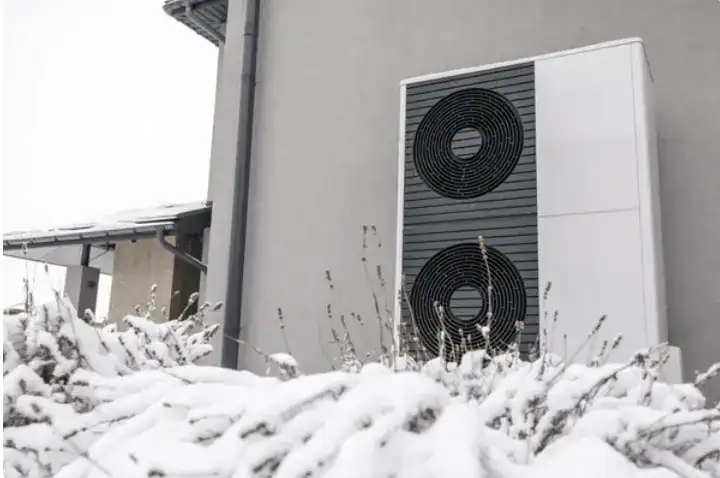
Weather also affects performance in another way: during very cold, humid conditions, frost can build up on the outdoor unit. Your heat pump automatically handles this with defrost cycles, briefly reversing operation to melt any ice. You might notice steam rising from the unit or a temporary drop in heating — this is completely normal and shows your system is working as designed.
Best Thermostat Settings for UK Homes in Winter
The Optimal Indoor Temperature
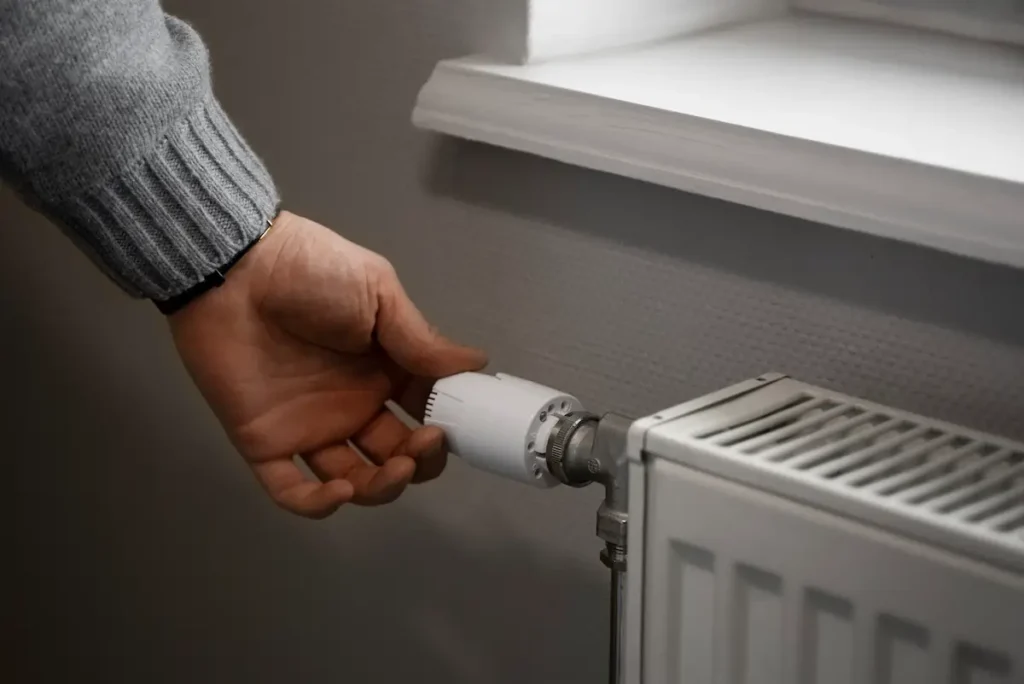
For most UK households, setting your thermostat between 19°C and 21°C strikes the right balance between comfort and efficiency. This might feel slightly cooler than what you were used to with a gas boiler, particularly because heat pumps deliver gentler, more consistent warmth rather than intense bursts of heat.
If you have elderly family members, young children, or your home has poorer insulation, you might prefer temperatures toward the higher end of this range at 21-22°C. Remember that every degree higher increases your running costs by approximately five to ten percent, so find the lowest temperature that keeps everyone comfortable.
Should You Turn the Heat Pump Off at Night?
This is one of the most common questions, and the answer might surprise you: no, it’s generally better not to turn your heat pump off completely overnight.
Heat pumps work most efficiently when maintaining a steady temperature. When you turn the system off and let your home cool down significantly, the heat pump has to work much harder to bring temperatures back up in the morning. This reheating process consumes considerable energy and forces the system to operate at lower efficiency, often negating any savings from the overnight shutdown.
Instead, use a slight setback temperature at night. If you normally keep your home at 20°C during the day, drop it to 18-19°C overnight. This gentle reduction maintains baseline warmth without the energy penalty of a full reheat cycle. Most modern thermostats and smart controls make this automatic once you’ve programmed your preferences.
When to Increase Temperature
There are times when slightly higher settings make sense. Poorly insulated homes may need 21-22°C to feel comfortable because heat escapes more quickly. Similarly, if you’re working from home all day or have health considerations that require extra warmth, don’t hesitate to adjust upward — but do so understanding that efficiency will decrease proportionally.
Best Flow Temperature Settings (Most Important Part)
Flow temperature is arguably the single most important setting on your heat pump. This is the temperature of the water leaving your heat pump and circulating through your radiators or underfloor heating system.

Understanding Flow Temperature
Think of flow temperature as the intensity of your heating. Lower flow temperatures mean your heat pump works more efficiently but heats your home more gently. Higher flow temperatures provide faster heating but at significantly reduced efficiency and increased cost.
The sweet spot depends on your heat distribution system and how well your home retains heat.
Underfloor Heating Flow Temperature
If you have underfloor heating, you’re in the ideal situation for heat pump efficiency. Underfloor systems work beautifully at low temperatures because of their large surface area.
Best setting: 30-40°C for modern systems
Most contemporary underfloor heating operates perfectly between 30°C and 40°C. Some older systems might need up to 45°C, but anything above this suggests your system wasn’t optimally designed for low-temperature operation. At these temperatures, your heat pump achieves its highest efficiency, potentially reaching COPs of 4 or above.
Radiator Flow Temperature
Radiators need slightly higher flow temperatures because they have less surface area than underfloor heating. However, there’s still considerable variation depending on radiator size and type.
Modern, properly sized radiators: 40-50°C
If your radiators were sized specifically for a heat pump installation (or you had them upgraded), they should heat your home adequately at 45-50°C. This flow temperature range allows your heat pump to maintain COP values around 3 to 3.5, which is excellent performance.
Older or undersized radiators: 50-55°C
Homes that converted to heat pumps without upgrading radiators might need flow temperatures of 50-55°C, particularly during the coldest weather. While this still works, be aware that efficiency drops notably at these higher temperatures, with COPs potentially falling to 2.5 to 3. This is still better than a gas boiler’s 90% efficiency, but it reduces the heat pump’s advantage.
If you consistently need flow temperatures above 50°C to stay warm, consider whether upgrading radiators in your main living spaces would be worthwhile. Even replacing just a few strategically chosen radiators with larger or triple-panel models can allow you to reduce flow temperature significantly, improving efficiency throughout the winter.
Avoid “Boost Mode”
Many heat pumps feature a “boost” or “max” mode that cranks up the flow temperature to heat your home quickly. While tempting during particularly cold mornings, this should be used sparingly if at all.
Boost mode typically forces flow temperatures to 55-65°C or even higher, causing your COP to plummet. You’ll heat your home faster, but at vastly increased cost — potentially three to four times more expensive per unit of heat than running at optimal temperatures. If you find yourself reaching for boost mode regularly, it indicates either that your flow temperature is set too low, your radiators are undersized, or your home’s insulation needs improvement.
Winter Settings That Make a Big Savings Difference
Beyond the basics, several often-overlooked settings and practices can significantly reduce your winter heating costs while maintaining comfort.
Enable Weather Compensation
If your heat pump supports weather compensation, enable it. This intelligent feature automatically adjusts your flow temperature based on outdoor conditions. On mild 10°C days, it reduces flow temperature to 35-40°C. When temperatures plummet to minus 5°C, it increases flow to perhaps 48-50°C.
This continuous optimisation can save 10-25% on energy consumption compared to a fixed flow temperature, and it happens automatically without any input from you. Many modern systems include this feature — check your installer’s documentation or contact them to activate it if you’re unsure whether it’s enabled.
Keep Internal Doors Open
This might seem counterintuitive, but keeping internal doors open helps your heat pump work more efficiently. With doors open, air circulates freely throughout your home, creating more even temperatures and reducing the chance that individual rooms become much colder or warmer than others.
When rooms vary significantly in temperature, your heat pump may cycle on and off more frequently or run at suboptimal temperatures to satisfy the coldest spaces. Better circulation means steadier operation and improved efficiency.
Maintain a Stable Schedule
Heat pumps prefer consistency. Dramatic temperature changes — switching from 15°C overnight to 22°C in the morning — force your system to work hard during periods that are often already less efficient (cold early mornings).
A schedule that maintains relatively steady temperatures with gentle transitions delivers better comfort and lower costs. Instead of “off from 11pm to 6am, then full blast,” try “20°C during the day, 18°C from 11pm to 6am, gradual return to 20°C starting at 5:30am.”
Lower Hot Water Temperature Slightly
Most households find that storing domestic hot water at 45-50°C provides perfectly adequate temperatures for daily use. Modern showers are typically limited to 38-40°C maximum anyway, so there’s no benefit to storing water hotter than necessary.
Your heat pump will automatically run a legionella protection cycle once per week, briefly heating water to 60°C to kill any bacteria. This weekly spike is fine — it’s the daily storage temperature that impacts efficiency. By keeping your hot water cylinder set to 45-50°C rather than 55-60°C, you improve your heat pump’s COP when heating water, reducing overall energy consumption.
Keep the Outdoor Unit Clear
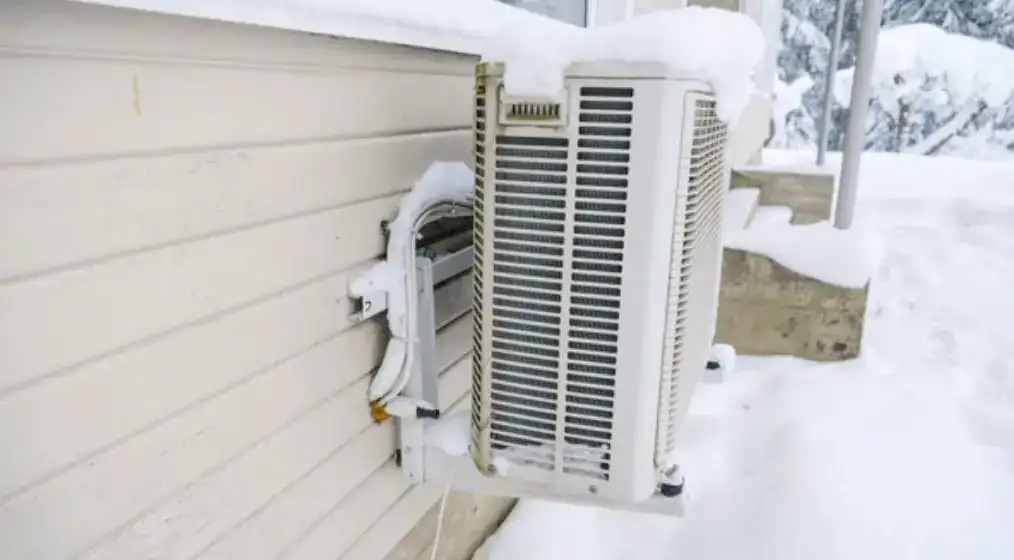
Simple maintenance makes a meaningful difference. Regularly check that your outdoor unit has clear airflow — remove any leaves, snow accumulation, or debris that might block the fan or heat exchanger. Even partially blocked airflow reduces efficiency noticeably.
In heavy snowfall, gently brush away any significant accumulation, but don’t worry about light dustings — the unit generates enough heat during operation to handle modest snow. Just ensure the fan isn’t completely obstructed and that melting ice can drain away properly.
Clean Indoor Filters
Most heat pump systems have air filters in the indoor unit that should be checked and cleaned every 2-3 months during heavy use. Clogged filters restrict airflow, forcing your system to work harder and reducing efficiency by 5-10%.
Cleaning them takes just a few minutes — consult your manual for the exact location and procedure. This simple task can noticeably improve performance and reduce running costs throughout winter.
UK-Specific Advice for the 2025 Winter

The 2025 heating season brings some particular considerations for UK heat pump owners.
Electricity prices remain elevated. While they’ve stabilised somewhat from the peaks of 2022-2023, electricity still costs significantly more than it did historically. This makes optimisation more important than ever — the difference between running at 35°C versus 55°C flow temperature can mean hundreds of pounds over a winter.
Newer 2025 models have better cold-weather performance. If your heat pump is a recent installation, it likely includes improved refrigerants and compressor technology that maintains higher efficiency at low temperatures compared to models from just a few years ago. Don’t be afraid to use slightly lower flow temperatures than older guidance suggested — modern systems often surprise owners with how well they perform.
Smart thermostats are increasingly common. If you installed a heat pump recently, you probably have a smart control system that can integrate with weather compensation, learn your preferences, and even respond to changes in electricity pricing if you’re on a time-of-use tariff. Take the time to explore these features — they’re designed to optimise performance automatically once configured properly.
The Boiler Upgrade Scheme continues. While not directly related to settings, remember that grants remain available for new installations and system upgrades. If your radiators are consistently undersized, requiring inefficiently high flow temperatures, upgrading them might be partially covered under energy efficiency schemes.
Common Heat Pump Mistakes to Avoid in Winter
Even experienced heat pump users sometimes fall into habits that reduce efficiency and increase costs. Watch out for these common pitfalls:
- Turning the system off at night — As discussed, this forces energy-intensive reheating cycles. Use gentle setbacks instead.
- Using high flow temperatures — Resist the temptation to crank up flow temperature for faster heating. Higher isn’t better; it’s just more expensive.
- Running radiators too hot — If your radiators feel uncomfortably hot to touch, your flow temperature is probably too high for optimal efficiency.
- Using Boost/Max mode daily — Occasional use during exceptionally cold snaps is fine, but regular reliance on boost mode indicates settings that need adjustment.
- Closing doors of heated rooms — This disrupts air circulation and can create cold spots that trigger inefficient operation.
- Expecting fast heat-up times — Heat pumps are marathon runners, not sprinters. They excel at maintaining steady warmth but take longer to heat a cold house than a gas boiler. This isn’t a fault; it’s how they’re designed to work efficiently.
- Ignoring maintenance — Clean filters, clear outdoor units, and annual professional servicing keep your system running at peak efficiency.

FAQ: Quick Answers for UK Homeowners
What is the best temperature for my heat pump in winter?
Set your thermostat to 19-21°C for comfort, and aim for a flow temperature of 35-45°C for underfloor heating or 45-50°C for radiators, depending on your system.
Should I turn my heat pump off at night?
No, it’s more efficient to leave it running with a slight temperature reduction overnight (18-19°C) rather than turning it off completely. The energy required to reheat a cold house typically exceeds any savings from the shutdown period.
Why is my heat pump running constantly?
This is normal and actually desirable. Heat pumps achieve their best efficiency when running continuously at lower intensity rather than cycling on and off. As long as your home maintains the set temperature and your energy usage seems reasonable, constant operation is exactly what you want.
Why does my heat pump do a defrost cycle?
During cold, humid weather, frost can accumulate on the outdoor unit. Defrost cycles automatically melt this ice to maintain performance. You might notice steam, a temporary pause in heating, or the outdoor fan stopping briefly — all completely normal.
What flow temperature is best for radiators?
Modern radiators work well at 45-50°C. Older or smaller radiators might need 50-55°C. If you consistently need temperatures above 55°C, consider upgrading key radiators to allow lower, more efficient flow temperatures.
Can heat pumps heat UK homes during freezing weather?
Absolutely. Modern heat pumps operate efficiently down to minus 15°C or colder, well beyond typical UK winter conditions. Performance decreases somewhat at very low temperatures, but they continue heating effectively throughout British winters.
Still have questions about winter performance? Our comprehensive guide explains exactly how heat pumps work in cold weather — no technical jargon, just clear answers.
Is weather compensation worth it?
Yes, definitely. Weather compensation automatically optimises your flow temperature based on outdoor conditions, typically saving 10-25% on energy costs compared to fixed settings. Enable it if your system supports it.
Final Tips
Heat pumps work perfectly in UK winters when configured with the right settings. The key principles are straightforward: maintain steady, moderate temperatures; use the lowest flow temperature that keeps you comfortable; and enable features like weather compensation that optimise performance automatically.
Small adjustments can save £200-£600 annually on heating costs while improving comfort. Start with the recommended settings in this guide, give your system 24-48 hours to stabilise, then make gradual adjustments based on your household’s specific needs.
Remember that every home is different — what works perfectly for your neighbour might need tweaking for your property. The important thing is understanding the principles behind these settings so you can optimise your system intelligently rather than simply guessing.
If you want to learn more about the operation of heat pumps in winter, you can check our previous article here.
Sources
- Renewable Energy Hub. (2025). “Guide to High Temperature Heat Pumps UK 2025.” https://www.renewableenergyhub.co.uk/main/heat-pumps-information/guide-to-high-temperature-heat-pumps-uk-2025
- LAC Ltd. (2025). “Heat Pumps and Winter Efficiency: 7 Common Questions Answered.” https://lacltd.uk.com/heat-pumps-and-winter-efficiency
- Heat Different. (2025). “Heat Pump energy saving tips for this winter.” https://www.heatdifferent.co.uk/heat-pump-energy-saving-tips-for-this-winter/
- ScottishPower. (2025). “Help and support for your air source heat pump.” https://www.scottishpower.co.uk/support-centre/air-source-heat-pump
- iHeat. (2025). “Tips To Look After Your Heat Pump In Winter – Maintenance Guide.” https://iheat.co.uk/boiler-help/heat-pump-winter-tips
- IMS Heat Pumps. (2025). “Understanding Your Heat Curve for Optimal Air Source Heat Pump Performance.” https://www.imsheatpumps.co.uk/blog/understanding-your-heat-curve/
- Zing Energy. (2025). “Air Source Heat Pumps UK: A Realistic 2025 Guide.” https://wearezing.com/blog/air-source-heat-pumps-uk/
- Energy Saving Trust. (2021). “The most efficient way to run a heat pump.” https://energysavingtrust.org.uk/how-to-ensure-a-heat-pump-runs-efficiently/
- Good Energy. (2025). “Heat pumps: How to manage your home’s temperature.” https://www.goodenergy.co.uk/support/articles/air-source-heat-pumps-how-to-manage-your-homes-temperature/
- Fairway Energy. (2025). “The Best Heat Pump Settings for UK Homes with Solar Panels.” https://fairway-energy.co.uk/the-best-heat-pump-settings-for-uk-homes-with-solar-panels/
- Renewable Heating Hub. (2022). “Flow rates, efficiency and COP.” https://renewableheatinghub.co.uk/flow-rates-efficiency-and-cop
- Vaillant. (2025). “Understanding energy usage of a heat pump.” https://www.vaillant.co.uk/advice/understanding-heating-technology/heat-pumps/understanding-your-energy-usage-with-a-heat-pump/
Commentaires
One response to “Best Heat Pump Settings for UK Winter (2025 Guide)”
[…] to optimise your heat pump further? Explore our comprehensive guide on heat pump settings and seasonal adjustments during winter to discover more ways to maximise performance […]