If you’re considering making the switch to a cleaner energy, you’ve probably wondered how heat pumps actually work. The technology might sound complicated, but the principle is surprisingly straightforward. This guide breaks down the science behind heat pumps in plain English, helping UK homeowners understand exactly what happens inside these efficient heating systems and why they’re becoming the future of home heating across Britain.
What is a heat pump? (the basics)
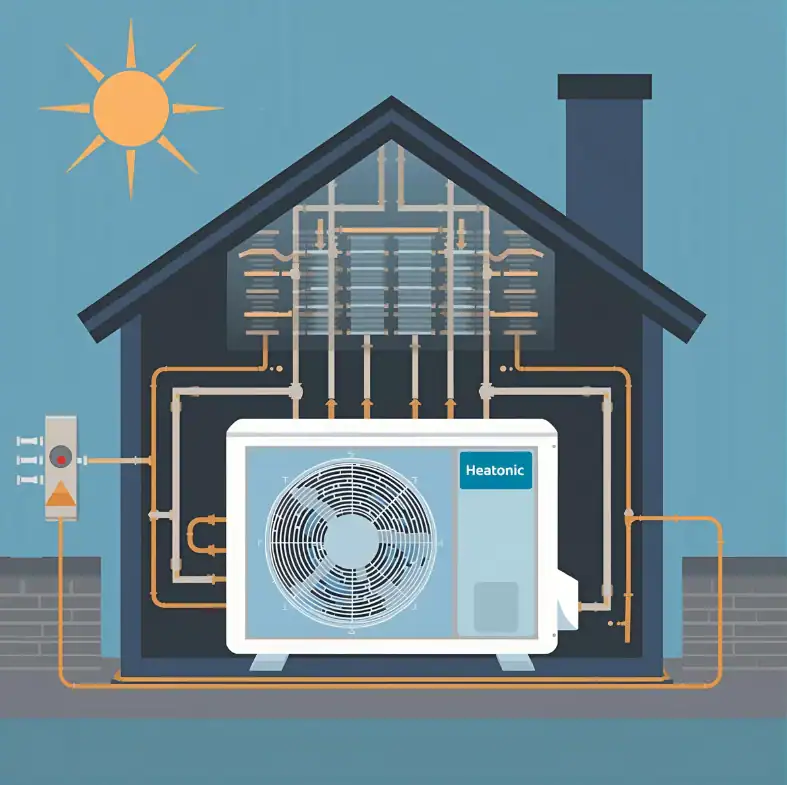
At its simplest, a heat pump is a device that transfers heat from one place to another using electricity. Think of it as a refrigerator working in reverse — instead of removing heat from inside a box to keep food cold, a heat pump extracts heat from outside your home and moves it indoors to keep you warm.
Here’s the really clever part: heat pumps don’t generate heat by burning fuel like a traditional boiler does. Instead, they simply move existing heat from the air, ground, or water outside your property into your home. This fundamental difference is what makes them so remarkably efficient.
How Heat Pumps Differ from Boilers ?
Traditional gas or oil boilers create heat through combustion, burning fuel to warm water that circulates through your radiators. Even the most efficient boilers can only convert about 90% of their fuel into useful heat — the rest is lost through the flue.
Heat pumps work completely differently. They use electricity to power a compressor that moves heat rather than generating it. This process is typically 300-400% efficient, meaning for every 1 kilowatt of electricity consumed, you get 3-4 kilowatts of heat output. That’s more than three times as efficient as even the best gas boiler.
Perfect for the UK Climate
You might wonder whether heat pumps can extract enough heat from cold British air to keep your home comfortable. The answer is a resounding yes. Modern heat pumps are specifically designed to work in climates like ours, functioning efficiently even when outdoor temperatures drop well below freezing.
There’s always thermal energy in the air, even on the coldest winter days. A heat pump at minus 15°C is still absorbing heat — it just has to work a bit harder than it does on a mild autumn day. The UK’s relatively moderate climate actually provides ideal conditions for heat pump operation, with our winters rarely experiencing the extreme temperatures that might challenge these systems.
How heat pumps work (step-by-step explanation)
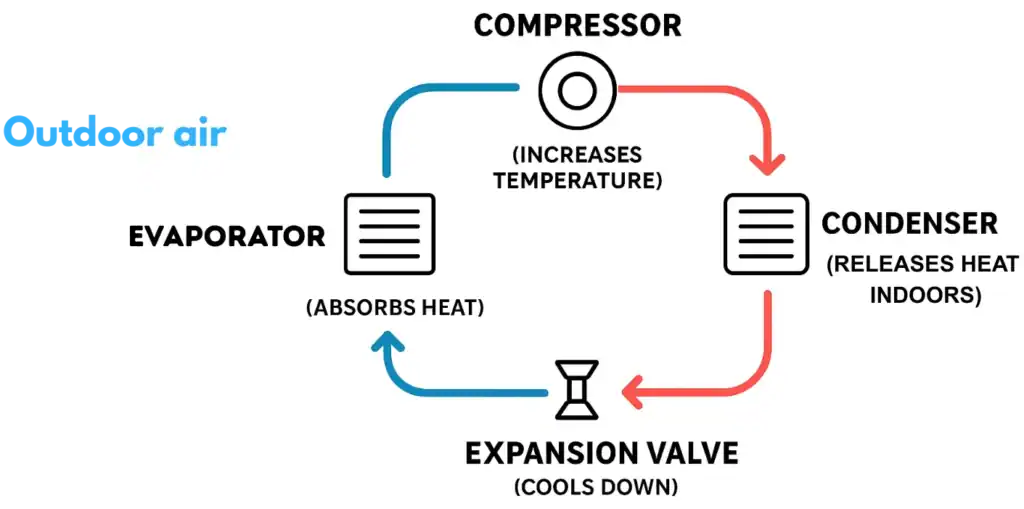
Understanding the heat pump cycle helps demystify how these systems deliver warmth to your home. The process involves four main stages, each playing a crucial role in transferring heat efficiently.
1. Heat Is Absorbed from the Air or Ground
The cycle begins with heat collection. In an air source heat pump, a fan draws outdoor air over a heat exchanger called the evaporator. Even when the air feels cold to us, it still contains thermal energy that can be extracted.
Inside the evaporator, there’s a special liquid called refrigerant. This chemical has a very low boiling point, which means it can absorb heat and evaporate even from cold air. As the refrigerant absorbs heat from the outdoor air, it changes from a liquid into a low-pressure gas. Think of it like water evaporating from your skin when you sweat — that evaporation process absorbs heat, which is why it cools you down. The heat pump uses this same principle, but in a carefully controlled system.
Ground source heat pumps work similarly, but instead of extracting heat from air, they use a network of pipes buried in your garden. A mixture of water and antifreeze circulates through these underground pipes, absorbing the stable heat from the earth before returning to the heat pump.
2. The Refrigerant Compresses the Heat
Once the refrigerant has absorbed heat and turned into a low-pressure gas, it travels to the compressor. This is where the real magic happens — and it’s powered by electricity.
The compressor does exactly what its name suggests: it squeezes the refrigerant gas, dramatically increasing both its pressure and temperature. This is similar to what happens when you pump up a bicycle tyre — the pump and the air inside get warm because compressing gas increases its temperature.
By the time the refrigerant leaves the compressor, it’s a hot, high-pressure gas — much hotter than the temperature you need inside your home. This temperature boost is essential for the next stage of the process.
3. The Heat Is Released into Your Radiators or Underfloor Heating
The hot, pressurised refrigerant now flows to another heat exchanger called the condenser. This is where the heat gets transferred to your home’s heating system.
Inside the condenser, the hot refrigerant passes through coils surrounded by water from your central heating system. As the refrigerant releases its heat to this water, it cools down and condenses back into a liquid. The now-warmed water circulates through your radiators or underfloor heating, spreading warmth throughout your home.
At the same time, the refrigerant — having given up its heat — transforms back into a high-pressure liquid, ready for the next stage of the cycle.
4. The Cycle Repeats
Before the cycle can start again, the refrigerant needs to return to its original low-pressure, low-temperature state. It passes through an expansion valve that dramatically reduces its pressure. This pressure drop causes the temperature to plummet, bringing the refrigerant back down to a point where it’s cold enough to absorb heat from the outdoor air again.
The refrigerant then returns to the evaporator, and the entire cycle begins anew. This process repeats continuously while your heat pump is running, constantly moving heat from outside to inside your home.
Types of heat pumps & how each one works
While all heat pumps use the same basic refrigeration cycle, they differ in where they collect their heat. Each type has its own advantages depending on your property and circumstances.
Air Source Heat Pumps
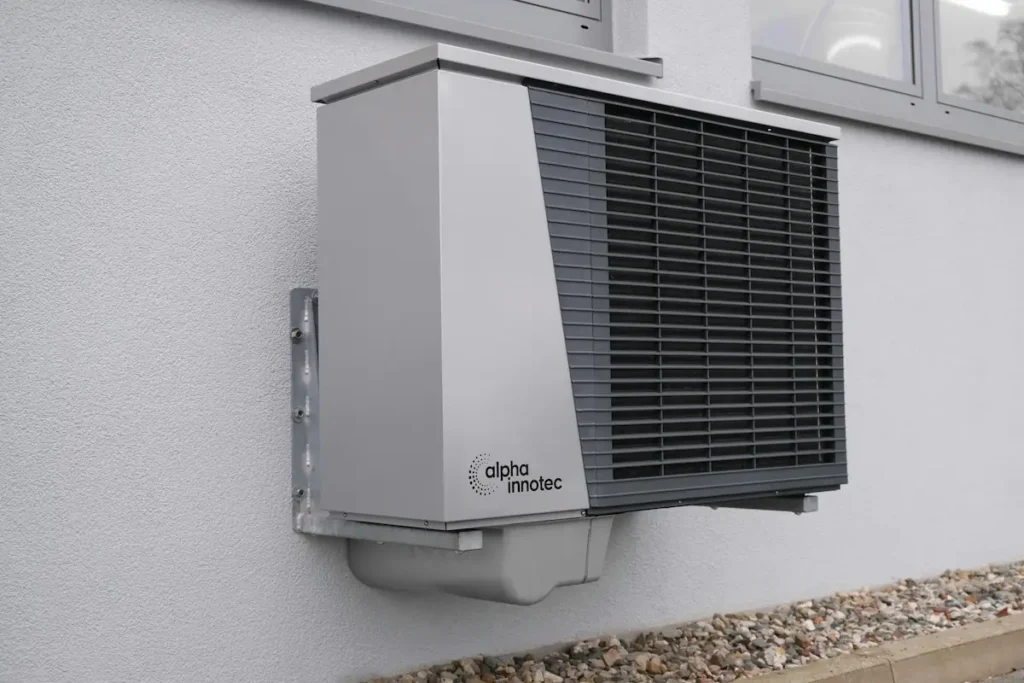
Air source heat pumps are by far the most common choice in the UK, accounting for about 96% of installations. These systems extract heat directly from outdoor air using a fan and outdoor unit, similar in appearance to an air conditioning unit.
The outdoor unit contains the evaporator and fan that draws air across it. Connected by pipework to your indoor heating system, it delivers warm water to your radiators or underfloor heating. Most UK homes use what’s called an “air-to-water” system, which integrates with your existing central heating setup.
Air source heat pumps are popular because they’re relatively affordable, quick to install (typically just 1-3 days), and suitable for most properties. You don’t need a large garden or any excavation — just a suitable outdoor space for the external unit.
Ground Source Heat Pumps
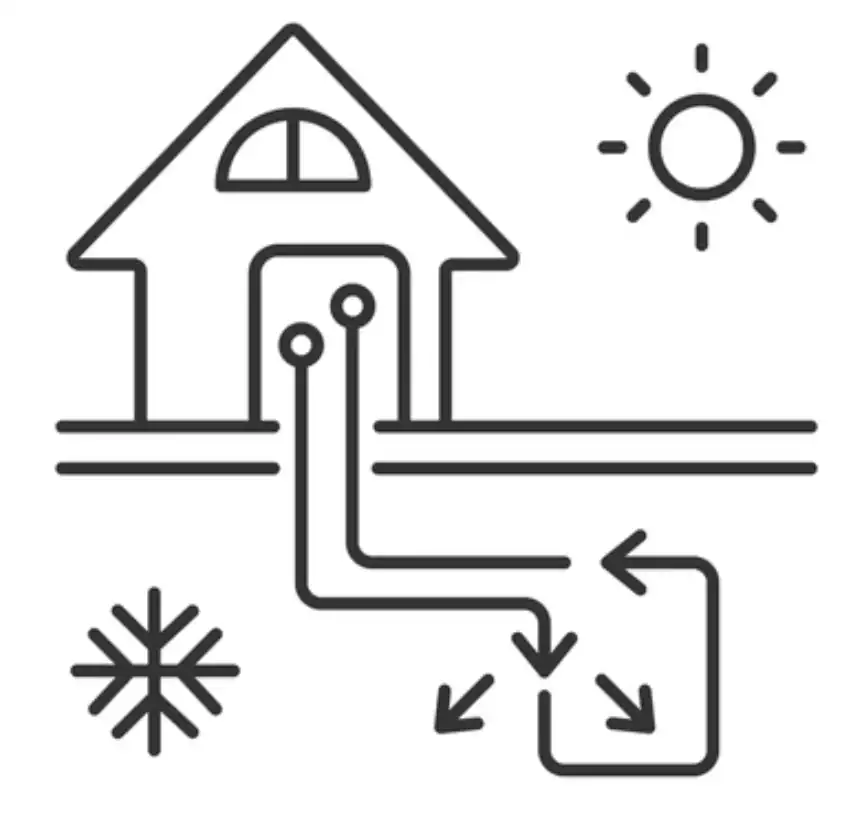
Ground source heat pumps tap into the stable temperatures found underground. Because soil temperature stays relatively constant year-round at about 10-12°C in the UK, these systems can operate with excellent consistency regardless of the weather above ground.
The system requires either horizontal pipes buried in trenches across your garden (needing 600-1,200 square metres of land) or vertical pipes installed in boreholes (requiring less surface area but more expensive drilling). A water-antifreeze mixture circulates through these pipes, absorbing heat from the earth before returning to the heat pump where it enters the same compression cycle described earlier.
Ground source systems are more expensive and disruptive to install, but they offer the highest efficiency levels and the most stable performance throughout the year.
Water Source Heat Pumps

Water source heat pumps are the least common option in the UK, but they’re ideal if your property is near a lake, river, or large pond. Pipes are submerged in the water body, where the refrigerant absorbs thermal energy from the relatively stable water temperature.
Because water maintains more consistent temperatures than air and has excellent thermal conductivity, these systems can achieve remarkable efficiency levels — sometimes even better than ground source pumps. However, they require specific environmental conditions, planning permissions, and sometimes water extraction licenses, making them suitable only for particular locations.
For a deeper breakdown of every heat pump system available in the UK, read our in-depth guide on air source, ground source, and water source heat pumps.
How efficient are heat pumps in the UK?
Heat pump efficiency is measured using terms you’ll encounter frequently when researching systems: COP and SCOP. Understanding these ratings helps you compare different models and estimate your potential energy savings.
COP (Coefficient of Performance)
COP measures a heat pump’s efficiency at a specific moment under particular conditions. It’s calculated by dividing the heat output by the electrical energy input.
For example, a heat pump with a COP of 3 produces 3 kilowatts of heat for every 1 kilowatt of electricity consumed. That’s 300% efficiency — or to put it another way, you’re getting triple the energy you’re paying for because the system is moving heat rather than creating it.
Most modern air source heat pumps achieve a COP between 2.5 and 4, depending on outdoor temperatures and system settings. Ground source heat pumps typically perform even better, with COPs of 3.5 to 4.5 being common.
SCOP (Seasonal Coefficient of Performance)
While COP gives you a snapshot of efficiency, SCOP provides a more realistic picture of how your heat pump will perform throughout an entire heating season. This measurement accounts for varying weather conditions, from mild autumn days to cold winter nights, giving you a better idea of real-world efficiency.
Most quality air source heat pumps achieve an SCOP of 3 or higher when operating at typical flow temperatures. The best units on the UK market can reach SCOPs of 4 or even higher, translating to 400% efficiency or more over the course of a year.
It’s worth noting that both COP and SCOP decrease as the flow temperature increases. Heat pumps work most efficiently when supplying lower temperatures — which is why they pair beautifully with underfloor heating or oversized radiators. A system running at a 35°C flow temperature will be more efficient than one running at 50°C, though modern systems can accommodate both.
Comparing Heat Pumps with Gas Boilers
Even the most efficient A-rated gas boiler can only achieve about 90% efficiency, meaning 10% of the energy you pay for is lost. In contrast, a heat pump with a seasonal efficiency of 300% (SCOP of 3) delivers three times as much heat as the electricity it consumes.
This efficiency advantage is why heat pumps can compete with gas boilers on running costs despite electricity being more expensive per unit than gas. As the UK’s electricity grid becomes greener and energy pricing policies evolve, the economic case for heat pumps will only strengthen.
Do heat pumps work in cold weather?
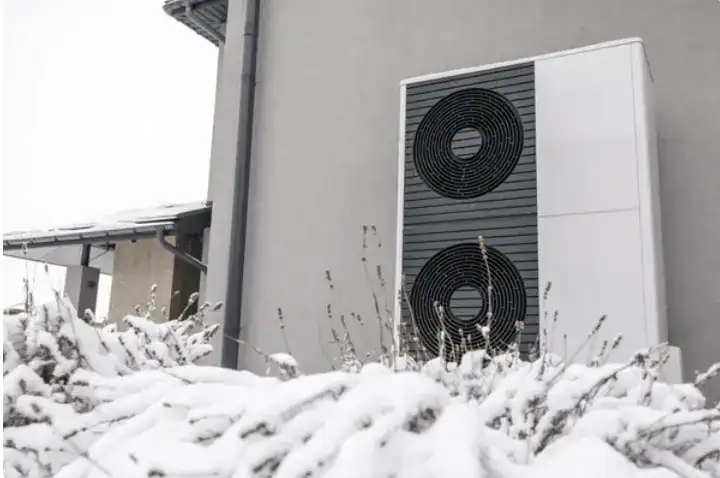
This is one of the most common questions UK homeowners ask, and it’s understandable why. The technology sounds too good to be true — extracting heat from freezing air to warm your home.
UK Winter Performance
The good news is that modern heat pumps are specifically engineered to work in cold climates. Units sold in the UK are tested and rated to function efficiently at temperatures well below anything we typically experience. Most quality systems operate effectively down to -15°C or even -20°C, whilst the coldest winter nights in most of the UK rarely drop below -5°C.
Yes, a heat pump’s efficiency does decrease somewhat as temperatures fall. A system that achieves a COP of 4 on a mild 7°C day might drop to a COP of 3 when outdoor temperatures reach -5°C. But even at this reduced efficiency, it’s still producing three times as much heat as the electricity it consumes — far exceeding any conventional heating system.
Field data from UK installations consistently shows that heat pumps maintain good seasonal performance throughout British winters. Even in Scotland, where temperatures are colder and more variable, properly installed systems deliver reliable, efficient heating all winter long.
Defrost Cycles
One feature you might notice during cold, damp weather is your heat pump’s defrost cycle. When outdoor temperatures are close to freezing and humidity is high, moisture in the air can freeze on the outdoor unit’s heat exchanger, forming a layer of frost or ice.
This is completely normal and nothing to worry about. The heat pump has built-in defrost cycles that periodically reverse the refrigeration cycle for a few minutes, sending hot refrigerant to the outdoor coil to melt any accumulated ice. You might see steam rising from the unit during this process — that’s just the ice melting and evaporating.
These defrost cycles are brief and automatic, designed to maintain optimal performance without any input from you. They’re a standard feature of cold-climate heat pump operation and actually demonstrate that your system is working as intended.
For a detailed look at heat pump efficiency during UK winters, check out our article here.
Pros and cons of heat pumps
Like any heating technology, heat pumps come with both advantages and considerations. Understanding both sides helps you make an informed decision about whether they’re right for your home.
Pros
- Outstanding Efficiency: With typical efficiencies of 300-400%, heat pumps deliver three to four times as much heat as the electricity they consume, making them far more efficient than any combustion-based heating system.
- Low Carbon Emissions: Heat pumps dramatically reduce your home’s carbon footprint. As the UK’s electricity grid continues incorporating more renewable energy, heat pumps become progressively greener throughout their lifespan.
- Year-Round Comfort: Many heat pump models can provide both heating in winter and cooling in summer, offering complete climate control in a single system.
- Long Lifespan: Properly maintained heat pumps typically last 15-20 years, with ground source systems potentially lasting even longer. The absence of combustion means fewer components subject to extreme wear and tear.
- Lower Maintenance: Heat pumps require annual servicing like any heating system, but they generally need less intensive maintenance than gas boilers. There’s no combustion to create soot or corrosion, and no risk of carbon monoxide leaks.
- Government Support: The UK’s Boiler Upgrade Scheme currently offers grants of £7,500 toward heat pump installation, significantly reducing upfront costs and making the technology more accessible to homeowners.
- Future-Proof Technology: With gas boilers facing gradual phase-out in coming years, installing a heat pump now protects you against future regulatory changes and ensures compliance with evolving energy efficiency standards.
Cons
- Higher Upfront Costs: Even with government grants, heat pumps typically cost more to install than traditional boilers. Air source systems average £8,000-£15,000 before grants, whilst ground source systems can exceed £24,000.
- May Require Home Upgrades: To perform optimally, heat pumps need well-insulated homes. You might need to improve insulation, upgrade radiators, or install a hot water cylinder if you don’t already have one.
- Different Operating Approach: Heat pumps work best when maintaining a steady, moderate temperature rather than the on-off heating cycles many people are accustomed to with gas boilers. This requires a slight adjustment in how you think about home heating, though many users report superior comfort once they adapt.
Final thoughts
Understanding how heat pumps work reveals why they’re becoming the heating system of choice for an increasing number of UK homeowners. By moving heat rather than generating it, these systems achieve efficiency levels that traditional boilers simply cannot match. The technology is proven, reliable, and particularly well-suited to the UK’s moderate climate.
Yes, there’s an initial investment involved, and your home may need some preparation to get the best performance. But with government grants reducing upfront costs, impressive running efficiency, and the assurance of future-proofing your home against evolving energy regulations, heat pumps represent a sound investment for most UK properties.
The key to success lies in working with experienced, MCS-certified installers who can assess your specific property, recommend the right system size and type, and ensure quality installation. When done properly, a heat pump delivers decades of efficient, low-carbon heating whilst reducing your environmental impact and protecting you against volatile fossil fuel prices.
Want to learn more about heat pumps and everything you need to know before installing one? Check out our checklist before installing a heat pump to discover how to avoid costly mistakes and get the most from your system.
FAQ
1. What is a heat pump?
A heat pump is a device that transfers heat from one place to another using electricity. Unlike a boiler, it doesn’t generate heat by burning fuel. Instead, it moves existing heat from the air, ground, or water outside your home into your home.
2. How is a heat pump different from a traditional boiler?
Traditional boilers burn fuel (gas or oil) to create heat, losing some energy in the process. Heat pumps use electricity to move heat, achieving 300–400% efficiency. For every 1 kW of electricity used, a heat pump can provide 3–4 kW of heat.
3. Can heat pumps work in the UK’s cold climate?
Yes. Modern heat pumps are designed to extract heat even in sub-zero temperatures. The UK’s moderate climate is ideal for their operation.
4. How does a heat pump work?
Heat pumps follow a four-step cycle:
- Absorb heat from air, ground, or water using a refrigerant.
- Compress the refrigerant to increase its temperature.
- Transfer heat to your home’s heating system via a condenser.
- Expand the refrigerant to cool it down, repeating the cycle continuously.
5. What types of heat pumps are available?
- Air Source Heat Pumps (ASHP): Extract heat from outside air, most common in the UK.
- Ground Source Heat Pumps (GSHP): Extract heat from underground using pipes buried in your garden.
- Water Source Heat Pumps (WSHP): Extract heat from nearby water bodies, ideal for specific locations.
Sources
- Energy Saving Trust. (2021). “Heat pumps: how they work, costs and savings.” https://energysavingtrust.org.uk/advice/in-depth-guide-to-heat-pumps/
- Heat Pumps UK. (2021). “How a Heat Pump Works.” https://www.heatpumps.org.uk/how-a-heat-pump-works/
- Heat Pumps UK. (2021). “The Vapour Compression Cycle.” https://www.heatpumps.org.uk/the-vapour-compression-cycle/
- Wikipedia. (2025). “Heat pump and refrigeration cycle.” https://en.wikipedia.org/wiki/Heat_pump_and_refrigeration_cycle
- Heatable. (2025). “What is the Most Efficient Heat Pump in the UK?” https://heatable.co.uk/heat-pumps/advice/most-efficient-heat-pump
- OVO Energy. “How efficient are heat pumps? What do SCOP and COP mean?” https://www.ovoenergy.com/guides/energy-guides/air-source-heat-pump-efficiency
- AN Heating. (2025). “Heat Pump Efficiency Ratings: SCOP, SPF & COP Guide.” https://anheating.co.uk/heat-pump-efficiency-ratings/
- Vaillant. “Understanding energy usage of a heat pump.” https://www.vaillant.co.uk/advice/understanding-heating-technology/heat-pumps/understanding-your-energy-usage-with-a-heat-pump/
- TheGreenAge. (2019). “Coefficient of Performance and Seasonal Performance Factor.” https://www.thegreenage.co.uk/coefficient-of-performance-seasonal-performance-factor/
- Dwellow. (2024). “Heat Pump COP, SCOP & SPF Meaning.” https://www.dwellow.co.uk/blog/cop-scop-spf-heat-pumps/
- Aventus Eco. (2025). “Air Source Heat Pump Performance in Scotland: 2025 Guide.” https://aventuseco.com/how-efficient-are-air-source-heat-pumps-in-scottish-winters-2025/
- Focus on Energy. (2025). “Heat Pump 102: How Does a Heat Pump Work?” https://focusonenergy.com/blog/heat-pump-102-how-does-a-heat-pump-work
Commentaires
2 responses to “How do heat pumps work ? A simple UK homeowner guide”
[…] to understand more about how your heat pump works? Check out our comprehensive guide on how heat pumps work to see the full […]
[…] The UK climate is actually ideal for heat pumps. Compared to continental Europe or North America, British winters are mild. Our maritime climate means we rarely face the extreme cold (-20°C or colder) that genuinely challenges heat pump performance. Most winter operation happens in the 0-7°C range where modern systems excel. Here is a simple guide on how heat pumps actually work. […]